Showing posts with label critique. Show all posts

Wednesday, November 13, 2013

Humble Pie

With the exception of certain universal life experiences, no other process has been quite as humbling as learning how to write well.
Knowledge is proud that it knows so much; wisdom is humble that it knows no more. William Cowper
For one thing, everyone thinks they’re an expert on writing, by virtue of the high literacy rates in our society and the sophisticated narratives that populate our entertainment, our news, even our interactions with one another. Add to this the critique process that is often necessary to strengthen a writer’s craft and their work—a necessary evil but one that often shakes the resolve of many beginning writers (as well as those at every stage of their career).

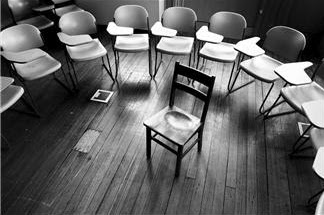
Image courtesy of Jaypeg on Flickr

Criticism can be brutal, confusing, and sometimes even helpful, but I believe only a humble writer can learn something from it. You have to be open to the process, and that means you need to set your ego aside.

Then there’s the whole rejection thing, and how you’ll probably accumulate dozens or more rejections for every acceptance you get.

Success is not a good teacher, failure makes you humble. Shahrukh Khan

I’ve wrestled before with the idea of the arrogant writer, and still believe that writers are guided by the hope that our words have meaning rather than the expectation that they do simply because they've been recorded. 

I've never had a humble opinion. If you've got an opinion, why be humble about it? Joan Baez 

After all, our first amendment right to write is a privilege not every one in this world enjoys. To have the time to indulge in writing is another privilege not everyone has.

I know that writing has humbled me. Not only in what I do and do not know, but also in the knowledge that the odds are so very great. Each and every time someone further along in their career takes a moment to reach out to me, I am humbled.

Am I alone in feeling this way? What is it about writing that has made you humble?

Wednesday, May 29, 2013

Invisibility of Progress

Improvements in writing ability are often hard to detect. So much of what is “good” is contextual—dictated by a particular project, the audience you’re writing for, or even market trends.

I’ve talked before about How Do You Know if you are ready for publication. Although it’s related, that’s not exactly what I want to talk about today.

Instead I want to focus on all the invisible things writers do in the hopes of bettering their craft, expanding their professional network, and positioning themselves for success to the best of their ability.

Image courtesy of Penywise of Morgue Files

Objective measures of success in this field are pretty self-explanatory. You’re either published or you're not (however you choose to define it). When you’re “not” published, chances are you’re doing a bunch of things other than writing in the hopes they will pay off in some small way in the future.

For example, I haven’t sold any short stories since last fall. If you are looking at my output objectively—well, there isn’t any by that definition. Instead, so much of what I’m doing these days is invisible. And I’m still trying to figure out what that means.

These invisible activities include:

Reading slush for Masque Books – Beyond occasional mentions here on the blog, it’s something I do to strengthen my ability to evaluate projects, diagnose writing problems, and gain insights into the editorial process. I won’t be able to learn these things overnight—this requires a commitment of months if not years to see the benefit from this type of activity.

Joining an invitation-only critique group – The meetings are intense and panic-inducing. I’m learning tons, making good connections, but as with any critique group, feedback is only as good as the projects I bring to them. Workshopping novels (and short stories to a lesser extent) can be a long process outside of development time.

Submitting to higher-tier markets – I have three in rotation right now that I truly believe in. And I’ve been aiming high. My sales last year gave me the confidence to target higher-tier markets. Personal rejections? Check. Second-round bumps? Check. Agonizing ‘You just missed the cut’ notices? Oh yeah. And the worst part is, all this means longer response times.

When non-writers ask me about my writing these days, it’s hard to explain how all these invisible activities fill up my time and contribute to my work. But they do mean something. They are valuable. They just go largely unseen because they don’t conform to objective measures of success.

I just have to believe they’ll add up to something that cannot be ignored one day.

What aspect of your writing life is invisible?

Wednesday, May 8, 2013

Feedback, But When?


Feedback is an essential part of the creative process. Well, at least mine! How else will you know if your intentions match up with the reception of your work? Today, I’ll talk about the different stages of a project where it might be appropriate to solicit feedback.


In-Progress Feedback

In one of my writing groups, the work I share is almost always a work-in-progress. It’s literate, but it’s usually a snippet from a novel or a short story that still needs some fleshing out. In this case, I’m actively looking to my other group members for assistance in how to flesh the story out, what I’ve overlooked, and ultimately whether I’m on the right track or not. Just realize not every writing group is geared to workshopping this kind of early stage writing. 

Best critiquers at this stage: Critical thinkers, other writers.

Developmental Feedback

I’d call this feedback on anything that’s been drafted and fleshed out, but hasn’t fully cured in a version you are confident in submitting somewhere. In other words, you’ve gotten to the end, but the ride is still a bit bumpy (not in a good way). Here, I’m looking for macro-level adjustments (micro is good too) that I can make so the story can gel into a finalized draft. At this stage, I want people who understand the big picture but also the aspects of craft that will help me realize it all on the page. 

Best critiquers at this stage: Other writers, particularly those writing in your genre.

Polished Feedback

This is feedback on a polished draft that you think is the best it can be. You know, all those checklists when you’re trying to decide if you’re ready to submit or not? If your answer is yes, it’s still a good idea to get another person (or persons!) to take a look. You might burn a few weeks only to get your readers’ blessing to send it out, but it’s better to know you are sending out your best work than being surprised by some issue that was overlooked at other stages. And when you only have one shot with agents, you want everything to be as good as it can be. 

Best critiquers at this stage: Readers of your genre, other writers.

Public Reception

So let’s say your story/novel/what-have-you got published. Yay! At this stage, there’s still a couple metrics you can use to see how your work is received and ways to use its reception and apply it to your next story. Obviously things like sales figures are important. But so are reviews. I’m not talking about the reviews your mom/critique partner/best friend wrote. I’m talking about the reviews written by strangers who have no personal investment in you or your story.

Seth Godin says the worst feedback is indifference. Some stories and novels get published, and just as quickly vanish into the ether. Now some of this can be attributed to poor marketing and positioning, and sometimes a story just doesn’t have the impact it should. And sometimes, you are lucky enough to get reviews that help you to understand what worked and what didn’t in your story. Elizabeth Spann Craig talks about this in Handling Reviews from Mystery Writing is Murder. Give yourself time for the sting to wear off, but even bad reviews can be instructive (so long as it's not coming from someone with an ax to grind).

One of my published stories was not received in the manner I had hoped for, and I learned a lot from seeing those reviews of my work. It forced me to analyze my assumptions in writing that particular story as well as my assumptions in who the story's audience was, and so on. Despite the short-term disappointment in that story’s reception, that was a hugely valuable experience, and one that will shape my work to come.

***

So obviously, you need feedback, and at what point you solicit it and from whom will be dependent on your writerly network and your own needs and comfort level with the critique process.

Personally, I try to get feedback at each stage of a project, if possible. In my goal to write faster, I’ve found that In-Progress Feedback is extremely helpful for heading off mistakes in a story that would need significant retooling if they were found much later in the process. However, for that to be successful, I think you need to be:

1)     very used to critique and,
2)     very clear in your own head with what you’re trying to achieve with your work.

Especially because rogue comments can easily affect the trajectory of a story and your confidence in it at the early stage of a project. It should also be said that if you’re sharing early work, you are sharing it with writers who:

1)     you trust
2)     understand that it’s an early draft, and
3)     can provide constructive criticism (not all critiquers are alike in this)

Your mileage may vary, of course. But I’ve found this work for me.

Happy writing (and critiquing)!

Wednesday, April 17, 2013

The Pros of Professional Development


While the blogosphere is a fantastic resource—rife with informative posts on craft, publishing, and other aspects of the writing life—it can get overwhelming and, at times, repetitive. Not that repetition can’t be helpful in crystallizing some aspects of craft. But too much, and my brain starts saying I’ve heard this before and I tune out.

When that happens, the act of learning, of actively improving, becomes passive. For this writer, that means I start to feel complacent. Not a good place to be.

I had been feeling this way recently—after all it’s been just under a year since I attended Taos Toolbox—so when I saw my local SCBWI chapter was hosting a NY agent for an all-day workshop, I signed up, hoping to be reinvigorated.


I was nervous as I always am when owning my writer persona in an unfamiliar environment with (gasp!) strangers. For the morning session, the agent presented an overview of essential craft elements for children’s books. Then the afternoon was all about the business side of things. It was a very informative session, and unfortunately I signed a waiver that doesn’t let me get any more specific than that.

The workshop would haven been tremendously helpful for me a year or three ago. As it was, I’d say didn’t learn anything “new.” Instead, I learned the relative importance this agent placed on different aspects of craft and business. Much of the content I had been exposed to before, though not as systematically all at once. Hand in hand with the workshop, I paid for an optional critique that didn’t uncover any fatal deficiencies in my writing. So at this point you may be wondering what I actually got out of a wasted Saturday and a c-note.

1. It’s Worth Checking In Sometimes


It is entirely possible to reach a point with your craft where you simply don’t need all the handholding you once did to stay productive. The writing is going well, you’re in the zone, this one’s going to sell, and so on. And that’s all great. But when you’re holed up in your cave, sometimes you can lose sight of what your writing really needs.

By attending a workshop like I did or engaging in some form of professional development to put you and your work out there, you have the opportunity to evaluate your writing through someone else’s eyes. On the business side of things, the publishing world is changing so rapidly every day, you can’t afford to not pay attention to opportunities to help put all the changes into perspective.

2. Don’t Underestimate the Value of Knowing You’re On the Right Track


You remember that critique I got? It let me know my opening for a new project was on the right track. That is invaluable. Looking back at where I was with past projects and knowing they wouldn’t have received this kind of feedback at this stage, shows just how much I’ve improved. Doesn’t mean it’s perfect, doesn’t mean there aren’t things I can do to strengthen my story. But it’s now a question of calibration, not wholesale revision. And that’s a huge difference (and a huge confidence boost).

3. Professional Organizations Provide Superior Opportunities


Now, this assertion is grounded in my personal experience. I’ve tried a lot of different things, including:

-Local, grassroots style writing groups like those you find through Meetup.com or your local alt-weekly. You can find some good individuals, but too often the group includes people who don’t know what they’re doing or have a different focus (say self-publishing when you have your eye on the Big 6).

-Classes at the local community college or university. Again, you might find some serious individuals, but many of these people are just testing the waters and haven’t screwed up the courage to take the plunge. The teachers at this level can also be suspect in their ability to teach or inspire. Note, I am not talking about MFA programs and the like.

-Regionally-focused writing organizations. The ones near you may be different, but the one closest to me serves as a catch-all for writers not represented by other organizations. Mine has a lot of writers writing memoir and literary fiction, and their classes and workshops cater to hobbyists and beginners.

-Residential workshops like Taos Toolbox. Expensive, but being surrounded by a dedicated group of peers, and being instructed by individuals who have lived through publishing’s ups and downs is priceless.

-Local chapters of national writers groups like RWA or SCBWI. These organizations are far more likely to have classes and workshops for the intermediate and seasoned writer.

I can say with absolute certainty that you get folks who are a lot more serious about learning their craft at organizations and workshops with a targeted focus like genre. Not one of the thirty people in the workshop I attended had stars in their eyes that they’d be the next JK Rowling. Everyone was aware of the years of hard work and the smart choices it takes to succeed in publishing.

Now, I’ve held off joining any of the membership organizations. Partly because it’s another cost in a field with too little money for writers as it is. Partly because I was a little too in love with the idea of the “lone writer” for a long time. And partly because I felt I had to “prove” myself in a genre before I could presume to join an organization dedicated to it. Imposter syndrome, much?

But now? I’m in a place where I’m reasonably confident in my abilities as a writer. I’m also very cognizant of what I don’t know as I contemplate what’s next for me. That’s where the support of a national organization becomes invaluable. I’m still debating which one is best for my career long term, but I can no longer ignore the benefits they can provide.

What about you? Have you had a recent professional development experience? How did it go?

Happy writing!

Wednesday, April 3, 2013

Rough Crit


Criticism is hard to take sometimes. But if you are actively seeking it out, there’s no better way to improve and hone your craft in my opinion. It means you take your work seriously and want to grow as a writer.

It also means you are guaranteed a rough crit session from time to time. So here are some tips for how to survive an in-person critique when it seems like your colleagues or fellow workshoppers are out to get you.

During the session:

1) Don’t get defensive

I repeat: Don’t get defensive. Getting defensive leads all too easily to getting angry, which can lead to things being said that cannot be unsaid.

If you find your hackles rising, find a way to channel that feeling into something productive. Me? I’m a notetaker. I write down all the bad things someone raises about my work during critique sessions. Even the things I don’t agree with. Something about the process of notetaking adds a crucial bit of separation between me and what’s being said, allowing me to compartmentalize the negative stuff and move on.

2) Don’t try to justify


We’ve all been in that situation where a writer says something like, “Well, what I was trying to do in that scene…” or “My intentions were…” et cetera. This often leads to a lengthy monologue where the writer explains why the story is the way it is, refuting every issue raised during the session along the way.

This is a waste of everyone’s time. If you try to justify what you wrote—preferring your words to a reader’s honest reactions—you’re basically saying your critiquers’ reactions to your story don’t matter. Which begs the question why you are soliciting critiques in the first place.

Note that this does not mean you can't ask someone for clarification about why they felt the way they did about your work. You can. But be wary if you find yourself protesting too much.


3) Don’t take your bad crit out on others


I’ve been in roundtable critique sessions where a writer responds to a harsh crit by being harsh in turn out of spite—not raising legitimate issues with the work under consideration. Don’t be that person.

If you can’t be civil in the aftermath of a rough crit, excuse yourself, take a time out, do whatever it is you need to do to find balance. It may not seem that way when your critiquers are tearing apart your work, but they are trying to help you. Don’t do something that will jeopardize their future good will.


After the session:

1) Give yourself some time

If you aren’t ready to dive into the negative feedback, that’s okay. Read a book, work on another project, do whatever it is you need to do to be in the proper headspace for processing feedback.

Taos Toolbox had a very large critique component. I deliberately refrained from looking at what my colleagues had to say about my work until I got home. Why? Because I knew if I looked at the written feedback it would distract me from my main goal of the workshop: making real connections with fellow writers. I didn’t want my interactions tainted by the critiques—that’s the one who got too heavy-handed with their line edits or that’s the one who hated my MC—instead of getting to know them on a more personal level. It also gave me time for their suggestions to sink in, and when I got home, I was more open to making changes.


2) Understand who is giving you feedback


In other words, not all critiquers are created equal. Just because someone writes a lot or well doesn’t mean they automatically give good feedback. Similarly, just because someone doesn’t have a lot of publishing credentials doesn’t mean they won’t have any insights into your work.

Some things to ask yourself when weighing feedback:

How much experience does this person have with critiquing?
Do they write in my genre?
Do I like their style/storytelling abilities?
Are they a writerly type to avoid? – Inexperience, ignorance, and ego can all be problematic


3) Understand what you are getting feedback on


You’d think this is a no-brainer, but you’d be surprised. Whatever you submit or send in, right? Here’s the thing. You know, consciously or unconsciously, what kinds of questions you have about your story. And whether you ask for specific feedback or not, the issues your critiquers raise can surprise you.

There’s nothing worse than expecting macro-level feedback and getting your story put through a line editing meat grinder. Or expecting help to polish a final draft, only to have your story premise dissected. That’s not to say those things can’t be helpful—usually they are. But if you aren’t expecting it, those kinds of crits can be devastating.

So double-check your critique expectations. If there’s a large deviation between the feedback you expected and what you actually got, ask yourself the following:

Did I specify my critique expectations? 

Sometimes it is as simple as saying your story is an early or a final draft—often that will cue the critiquer to respond accordingly. Other times, you may need a second opinion on a problematic element (say structure or characterization). You want to make sure you tell your critiquers that. It may not help—they could forget or get distracted by another aspect of your story, but at least you know you tried to get the right kind of feedback for your story.

Did I inadvertently trigger one of my critiquer’s hot-button issues? 

People will respond in unexpected ways to your work. If you hand an atheist a Christian romance, well, that could lead to a very interesting critique. People with different worldviews and life experiences are great to have in a writing group—but those very differences can lead to surprising results in practice as well.

It usually comes down to knowing the people you are exchanging work with. As someone who’s spent a lot of time reading and writing romance, I can be very critical of those scenes. One of my writing friends is an interior designer, and often her comments pick apart descriptions of interior spaces and architecture. Similarly, scientists get cranky when you fudge scientific details or resort to handwaving in speculative works.

So if a critiquer is overly sensitive to an aspect of your story, ask yourself why. Usually it is because they have firsthand knowledge or expertise on a particular subject. Instead of getting defensive, use their knowledge to strengthen your work.

***

I hope this post results in less stressful and more useful critique sessions. For more on this subject, check out 5 Ways to Get Good Revision Notes.

Happy writing!


Wednesday, March 27, 2013

Applications still being accepted for Taos Toolbox 2013


Do you love science fiction and fantasy?

Do you want to take your writing to the next level?

Do you have a speculative, novel-length story in need of critiquing?


Then consider applying for Taos Toolbox 2013. The workshop is a master class in science fiction and fantasy writing, taught by two luminaries in the field, Walter Jon Williams and Nancy Kress. This year’s guest lecturer is Melinda Snodgrass.

I attended the 2012 workshop (read more here and here). I found it to be a fantastic opportunity to hone my skills and form valuable relationships with my SF/F peers. Plus, two weeks in the mountains of New Mexico, with people who not only understand the writing life, but live it, was an amazing experience.


If you are at all interested, I encourage you to apply. A writing sample is required, but it doesn’t have to be what you plan to workshop come summer. Feel free to contact me if you have any questions.

To learn more about the class of 2012, check out fellow toolboxer CatherineSchaff-Stump’s series of interviews (myself included). You'll be able to see what brought us to the workshop and the different trajectories the writing life can take.

Happy writing!


Wednesday, March 20, 2013

Shifting Priorities

How is it March already?

What started out as a one-week break from the blog turned into two. And the only reason I’ve been remiss is because I’ve been slammed lately.


My critiquing responsibilities skyrocketed since the fall when I joined a new writing group. We meet monthly, and the week before, each member submits anywhere between 30 to 100 pages of their WIPs. Then those pages need to be read and responded to in time for the meeting. Needless to say, when that week rolls around each month, critiquing has to be the first priority.

My own writing often has to be put on hold, and that means my blog as well. I’m also a member of another writing group that meets weekly, so I sometimes have to be creative with how I divvy up my time.

This month another variable was added to the equation—my editorial pass on the collaborative project I wrote about a few weeks ago. 70k that needed extensive line and developmental edits. Hence the radio silence on the blog.

Now, I wouldn’t trade joining the new writing group or working on the project for anything. But sometimes something has to give, and more often than not, that’s this blog.

I’ve been blogging now for three years. When I started, conventional wisdom was that you needed to do social media all the time. Now, slowly but surely, people are starting to back away from that.

If you’re a totally new, unpublished writer who is focused on fiction, memoir, poetry, or any type of narrative-driven work, forget you ever heard the word platform. I think it’s causing more damage than good. It’s causing writers to do things that they dislike (even hate), and that are unnatural for them at an early stage of their careers. They’re confused, for good reason, and platform building grows into a raging distraction from the work at hand—the writing.
Do I regret blogging? Absolutely not. I enjoy it and I’ve enjoyed the connections I’ve made because of blogging. But that doesn’t mean I always enjoy the time and energy it takes to maintain one.

Especially when it comes up against my own writing time and professional responsibilities.

So that’s where I’m at. If I’m not here, I’m writing. Which is how it should be.

Wednesday, February 20, 2013

Immaturity in Writing

In January, I started reading slush for Masque Books, a digital imprint of Prime Books. And so far it’s been a fascinating peek behind the publishing curtain.

I’ve seen my fair share of crazy fonts and strange formatting, but not nearly as much as I expected to based on the horror stories of the slush pile that get bandied about. What’s surprised me the most is the overall care that’s gone into the submissions. This doesn’t mean they’ve knocked my socks off, but rather that the average submission is much higher in quality than I expected—they’ve been literate, proofread if not perfect, and largely followed the submission guidelines.

That kind of attention to detail is encouraging to see, which is why it’s so heartbreaking to get to the actual story and know within two paragraphs, sometimes sooner, that it’s a no-go. And more often than not, the culprit is immature writing.


What do I mean by that? Well, it’s a catch-all phrase that I use when I see a manuscript that has either sentence-level issues or a lack of sophistication with elements of craft (or both).

Sentence-Level Issues

This can be as simple as a poor grasp of grammar—improper punctuation, run-on sentences, etc. A mistake or two won’t make or break a submission. But they can add up, and when the errors are egregious, it’s that much harder to take a story seriously.

There are also more subtle signs of sentence-level issues. Things like wordiness, filtering, awkward phrasing. I’ve trained myself to write tight, to weed out inefficiencies in my text, to catch mistakes and edit out the awkwardness. When I see project where these kinds of things aren’t addressed, it makes me wonder just how far along the writer is in their journey. Is this their first project and they haven’t quite figured everything out? Or have they just not taken the time to refine their writing to make it the best it can be? I usually go with the former interpretation, and have to hope they won’t give up when they get their rejection, that they’ll keep writing, keep striving until they get their stories out into the world.

Bottom line, every word in your story subconsciously signals your ability as a storyteller to a reader. Sentence-level issues are the one thing you as a writer can control in a highly capricious business, so there’s no excuse not to learn them. And if you haven’t learned them, when I read your submission I assume that you are too immature a writer to competently tell me a story I’m interested in.

Elements of Craft Lack Sophistication

This is even more subjective, but in some ways more detrimental to a submission. Say an author has great descriptive powers, but cannot orchestrate an action scene to save their life. Or the voice of the protagonist is largely spot on, but infodumps and unrealistic dialogue grounds a story before it even gets started. Essentially, there is some aspect (or aspects) of the writer’s craft that screams inexperience, by virtue of it being poorly handled or weaker relative to other aspects of the work.

This isn’t always a fatal flaw—after all, a good editor will work with a writer to improve all aspects of a story. But the problems with craft must be surmountable. For example, a story where every paragraph tells the reader what to think instead of showing them or a clumsy inner monologue that sidelines action in every scene are too insidious to tackle. Other things like a lack of specificity or an overabundance of specificity could be fixable, but the story would have to be worth the effort.

This is where beta readers and critique partners and groups come in, because writers can be blind to their shortcomings.

Bottom line, you cannot afford to ignore the weaker parts of your craft and hope the rest will be strong enough to carry your story. If I see a big imbalance in your abilities as a writer or if the way you handle certain aspects of craft show your inexperience or lack of awareness of what’s acceptable, then I’m going to assume you haven’t matured as a writer and that your story isn’t ready for publication.

Harsh? Yes. Necessary? Also yes. I’ve only recommended two stories since I’ve started slushing, and those were both with big reservations.

So at the end of the day, remember: Writing stories is hard. Rejecting stories is easy.

It’s all too easy to find a reason to reject a story. You’re goal as a writer is to minimize those reasons for “easy” rejections (following guidelines, fine-tuning your prose, making strides with your craft). You want to make it difficult for me to say no. You want me to keep hoping if I turn the page, it will be worth it.

I want it to be worth it. And you can prove that to me by maturing as a writer. It won’t happen overnight. But if you keep writing, keep working, keep striving, you’ll get there. We all will. One day.

Thursday, November 1, 2012

How Do You Critique?

The last couple of weeks (and maybe into the next) I’ve been buried in critiques. Hence this slightly delayed post. I’m not complaining, mind you, but the volume recently—the result a confluence of chance—has forced me to evaluate my process in between all my edits, insertions, and comments.


Some observations:

I read everything. For me, critiquing is less about the genre or subject matter and more about supporting the writer behind the project.

I firmly believe there is a level of trust required for exchanging work. And that mutual respect means doing my best to evaluate the work I agree to critique, regardless of what it is, as I would hope others would do for me. It’s too early for me to be trapped in a particular genre, and I’m always eternally grateful that my CPs and trusted readers are usually game to crit whatever I send their way.

Part of this is because I’ve spent a lot of time in non-genre specific writing groups. In fact, one of the more successful groups I’ve been a part of has members writing in completely different genres—poetry, alt lit, women’s fiction, and then there’s me. All of us have good bs detectors and strong writing chops, which definitely helps. Plus having this exposure also keeps me from getting tunnel vision from the particular genre/style I’m writing in.

If a fellow writer thinks they’ll benefit from an honest reader reaction from me, I’m happy to support them. Karma is important, and I know I've benefited from the writer connections I've made. That’s not to say if they hand me a mystery I’ll be thrilled. But I’ll do my best to critique it, with the caveat that I’m not as well-versed in this genre as I am others.

I usually have to read a piece twice before I’m ready to critique.

This is time consuming, yes. That has become abundantly clear these last couple of weeks. BUT, it’s something I’ve made peace with. Mostly because my own standards of quality demand it.

Reading the piece the first time, I’m trying to get a general feel for the story, understand how all the different elements work as a whole. I might make some copy edits in the first round, but really I’m just reading for story.

This is a tremendous help when it comes time to offer my comments on the second pass. That’s when I decide what are real issues that need to be dealt with to support an author’s story intentions. I believe I have to understand the macro story elements into order to comment on the micro-level ones (outside of grammar).

My critique style has evolved as I’ve taken strides with my craft.

What this essentially means is that early on, I was overly focused with style and micro level issues. If someone wrote a line in a way I wouldn’t, I’d offer my suggestions for changing it. I was also overly concerned with "the rules" and more than happy to say "You're doing it wrong!" because the craft books said so. I won't say I was a Craft Nazi, one of the Writerly Types to Avoid, but it took time for me to digest all that advice so I could apply it in more constructive ways.

But after a number of critiques, after reading a variety of work, I’ve been exposed to a lot of different ways of doing things. And I've realized with all the do's and don'ts out there, all that matters is whether a particular technique is effective in a particular story context. That's it.

So I’ve adopted a more flexible live and let live policy. I’ll still point out awkward phrasings or unsuccessful techniques, but I’ve come to realize that just because someone doesn’t write something exactly the way I would doesn’t make it wrong. It just makes it different, and that’s ok. And that frees up more of my mental space for addressing more substantive story issues.

I rarely say no to requests to exchange work, but the time may be nigh to change that.

For so long, I was too scared to share my work. Then, when I got less scared, I had trouble finding people to share it with. I talked about this progression in my post The Critique Mindset a while back.

Over time, I’ve collected a formidable group of trusted writer friends: local writers, online writers, and my writer colleagues from Taos. For every person I can rely on for critiques, they must be able to rely on me. And as the last weeks have shown me, I’m near my limit, if I still want to be producing my own work at a pace that doesn’t make me cranky. (Hint, I'm cranky this week.)

So while I’m a huge proponent for exchanging work for critique, all things in moderation. And maybe it’s time to take my own advice.

***
Happy Nanoing for those participating! Happy writing for the rest of us! And only good thoughts for our friends on the east coast!

Wednesday, September 19, 2012

Feedback: It Gets Easier


This is a post I couldn’t write a few years ago. Back then, I had just started sharing my work with others. Although I desperately needed feedback, sometimes it hurt. Sometimes the criticisms made me doubt. And sometimes those criticisms made me change my stories, for better and worse.

But it doesn’t change the fact that feedback is a necessary evil in writing.

That first project? You know the one. The story that started them all, the one you’ll see through the bitter end, and the one you fear will end up in the bottom of the desk drawer. That one—your baby.

Feedback on that story is always the hardest. There’s no way around that, unless you have a Teflon-coated ego (and if you have one of those maybe you shouldn’t writing). You put so much of yourself into that first book, your dreams and hopes that you’ll buck the trend and get on the NY Times bestseller list. Any critical feedback will seem like an indictment against all that labor and love.

But if you’re writing for publication, you’ll get over that eventually. You’ll have to. Along with revising and revising some more until it’s time to start the feedback cycle all over again. It’ll go easier the second time around. After all, you already understand how it works. You have a stronger sense of your story’s strengths and weaknesses, and perhaps more importantly, you’ll understand yourself better. Which means knowing when you are overreacting to a piece of criticism and knowing which suggestions you need to consider and which ones you need to ignore. This is a huge milestone, but it takes practice with the feedback cycle, and sometimes a strong understanding of the people reading your work.

It takes time to do this. But it’s time well spent, because you need to get all this out of your system in order to start on the next project, regardless of whether your baby sells.

With the next project, you’ve told yourself you’re not going to make the same mistakes as the first. And you won’t—you’ll just make different ones. And then the feedback circuit will give you time to fix them.

It’ll be even easier this time. You know why? Because you don’t have nearly the same emotional investment in this project as you did in the one before. I’m not saying you don’t care about this project—you most certainly do. But now you know that this project isn’t the be-all and end-all of your writing career. You have other stories in you. This new story proves it.

So feedback this time may still sting, but you’ll be better able to compartmentalize it and use it to fuel positive changes in your work. And this is hugely valuable when you’re faced with tough revision decisions like restructuring your novel, adding or subtracting characters, or simply gutting the story and starting all over again.

The hard work that maybe you weren’t strong enough to even consider with your baby. But now, when the hunger for getting published—getting out there—when you have enough confidence in your craft that it’s just a matter of the right story hitting at the right time? Yeah, that. That’s when the tough decisions get made.

(and if this sounds like a pep talk, it kinda is for me)

The takeaway is this:

The more you write, the more mistakes you get to learn from.
The more mistakes you learn from, the more viable stories you create.
The more viable stories, the easier it is to deal with feedback.

Why? Because you can be more objective about your work. Because you no longer have the one story to care about, you have other projects now. All that emotion, good and bad, gets distributed across them. The successes and failures of individual projects gets muted, which makes it easier to make objective decisions how to manage them.

It’s a good thing, I think. It’s just important stay engaged, move forward, and above all, keep writing.

 
In my experience, my objectivity is reduced the longer I spend working on something. Tunnel vision is inevitable—that’s why it’s so important to take a break from your projects every now and then to gain perspective. It’s also why you need other readers.

But at the very least, if you keep writing, the less likely you’ll fall into the trap you did when writing your baby.

*Time spent working on a project could be equated to length of project as well. For example, negative criticism on my shorter pieces doesn’t nearly affect me as much as for my novel-length stories. But your mileage may vary. 

Wednesday, July 18, 2012

Managing Critique

I’m a firm believer in the benefits of critique—regardless of what shape they take.

Since getting serious about writing, I’ve experienced a wide range of critiquing styles and formats:

Reading Work Aloud – On one end of the spectrum, there’s things like open mic nights where tepid applause or catcalls tells you how well you did. I’ve done this once, and although I didn’t crash and burn, I don’t want to repeat the experience. On the other end, I’ve been in groups where you read a predetermined number of pages aloud and then discuss them. Great for problem scenes or seeing if your story or chapter opener hooks readers.

Exchanging Work – I’ve done where an agreed upon number of pages (up to 10 pages, up to 1 chapter, first 50 etc.) are exchanged in advanced and then discussed in small groups. Great for fostering local connections and looking at stories more in-depth. I’ve also exchanged full and partial manuscripts with critique partners and other trusted readers, marking up the text and making micro and macro level comments. It’s a lot of work but it allows you to evaluate a work as a whole, and as we all know, good readers are priceless.

Contests – There’s a wide variety of these for both short and long form work. Things like Miss Snark’s First Victim provide a forum for novel openers to see if readers are hooked. Query contests also abound on blogs. Plus there are a wide variety of contests sponsored through local and national writing organizations. Contests can provide you with feedback if you are in a place were you don’t have a trusted reader in your corner, but beware contest fees as not all contests are created equal.

Then there’s writing workshops like Taos Toolbox, where a lot of feedback comes your way all at once.

And that can be overwhelming. Strike that. It is overwhelming.


So how do you incorporate it all?

Well, when I have the opportunity to collect feedback from a variety of sources all at once, I like to focus on macro-level issues first.

These are general vibes my CPs and trusted readers get from my story or, in the case of the critiques from Taos, what stands out most in my mind as people went around the table and told me what was wrong with my stories.

Based on those things, I do a revision pass. That way I’m proactively working through what I perceive as problems with my story.

Only after I’ve done my initial revisions do I go back through the more detailed individual crits. That way I find I’m less reactive to individual comments that can often lead to changes in my story that serve the critiquer, not necessarily the manuscript as a whole.

Granted this process won’t work for every project, but I like to use this model whenever I can. Besides, by tackling the “big” issues first, because usually by the time you get to the smaller nits, many of them have already been fixed or eliminated.

There’s also some caveats to critiquing more generally.

As Kristine Kathryn Rusch pointed out in her post Perfection:
Critiquers get the manuscript for free and they’re asked to criticize it. Of course, they will find something wrong with it. In that circumstance, we all will.
So remember, just because someone says there is a problem with your story, figure out if it’s because they’ve been asked to find a problem or if there really is something wrong.

It’s also worth noting that not all critiquing advice is equal. Some people may not understand your vision for your story or be unable to divorce themselves from what they would do in your stead.

Fellow Toolboxer Catherine Scaff-Stump in Technique versus Vision explains:
If you ask me to give you feedback on a story, my job is to talk to you about your technique, but it is not to suggest you move in a different direction. I am not going to ask you to compromise your vision. You know what you want to do.

Worse, why would I pass judgment on your vision? I can say, "Your piece isn't very good." Unpacked, that should mean that you are vague, or your characters are underdeveloped. There should be things I can do to help you with technique. But I shouldn't be thinking that your piece isn't very good because I don't like it. Because it's not my thing. Because it's not my sub-genre. That's besides the point. I should be focusing on your technique, not telling you to like what I like.
Another great resource for figuring out how to incorporate feedback comes from How to Tackle Critique Notes from Writer Unboxed.

What other tips and tricks have you learned from your own critique experiences?

Happy writing!

Wednesday, July 11, 2012

Asking For More

What struck me most about my Taos Toolbox experience, I think, was how straightforward the lectures were. That’s not to say I didn’t learn more in-depth tricks or benefit from discussing different story elements over an intense two weeks—I did and it helped crystallize a lot of concepts for me.

But I do think you reach a certain point with craft, where there’s really nothing more to say. You either know it and use it, or you don’t. We all know we need that balance between character, plot, and emotion. And we have scenes and grammar to fashion our stories. But at a certain point, it simply comes down to doing.

At Taos, I learned that I’m doing many right things in my writing, at a high level. I also learned that I need to be doing more of it. At the individual story level and across stories. As I was told in my consultation at the end of the workshop (paraphrasing), “You can write. You need to stretch yourself and see what hits.” In other words, I know the basics, even beyond, and it’s time to stop being precious about my individual projects and start producing.

Wait, you want more from me?

As guest Daniel Abraham told us, “Publishing is a casino,” and you never hit the jackpot if you aren’t showing up everyday plugging quarters into the slots.

Time for the big girl pants.

That’s a scary thought. I feel a little like Dorothy in that I’ve realized I’ve been able to write all along. But if that were true, I’d like to think I’d be a bit further along in my writing journey. So there must be something else I’m missing, some missing piece of the puzzle.

I do think part of it comes back to output. I’m not a fast writer. I like to stew over my stories ideas and get lost in the different worlds. I’ve gotten faster at writing in the last year and a half, and I’ve been pushing myself to get there, but still other writers can write three short stories in the time it takes me to write one.

I also don’t move onto new projects quickly enough. I like to tinker, I like to figure out how to make my stories the best they can be, and sometimes that means I’m holding onto a sinking ship expecting to be rescued when really I should have taken that life raft and be onto something new. But if I don’t care about my work, how can I expect editors/agents/readers to?

Kristine Kathryn Rusch had a recent post on “Perfection” -- it’s worth a full read, but I want to focus on something she said:
Keep writing, keep learning, keep improving. But for god’s sake, don’t look backwards. Those books are done.

How do you know when a manuscript is done? That’s trickier. I think you should trust the process, fix the nits, and move to the next book. Writing is a subconscious art, not a conscious one. You heard your first story before you could speak, so your subconscious knows a lot more about writing than your conscious brain ever will.

Trust that.

Many writers don’t believe what I just wrote, and that’s fine. You need to define it for yourself. Set a limit on revisions, set a limit on drafts, set a time limit. (My book must be done in August, no matter what.) Then release your book on the unsuspecting public.

The book will never be perfect.
And that’s another hard thing for me. I want to write a perfect story. I want each of my stories to be perfect. And I work hard to revise them, chasing after some nebulous concept of perfection, when maybe I should be sending them out and moving on to the next story.

Of course, an exception to Rusch’s position is Andrew Porter, who wrote “Looking Back” for the latest Glimmer Train bulletin. An extensive revision of one of his older stories has gone onto being his most successful, wining him the Pushcart. He says:
I think most writers have a tendency to discount their early work, especially those pieces that were written when they were first starting out, when they were just figuring out how to write a short story in the first place.

In some cases, we're probably right to discount those early efforts. I know, for me, there's a certain cringe factor involved. Sometimes simply remembering the basic premise of one of those early stories is enough to make me shake my head and vow never to look back. Still, I've recently begun to wonder whether my own tendency to always look forward—to always believe that my best work lies before me, that the fiction I wrote five years ago isn't nearly as good as the fiction I'm writing today—doesn't prevent me from recognizing the potential value in some of those old unpublished stories that are just sitting there on my hard drive or collecting dust in a folder.
So writers should always be moving on to the next project, except when they shouldn’t. Hmm.

So what makes the difference? Fellow Toolboxer Catherine Scaff-Stump may have stumbled upon the answer in her post-workshop post on Technique versus Vision (also worth a full read). In it, she talks about how workshops can teach technique, but they can’t teach vision, and how the critique process can muddy the two.
I'm going to work my ass off regarding technique. And...so what if my vision is different? Different can be the next thing. If I find myself doubting my technique, I should. I can fix that. If I find myself doubting my vision, that's the end of the story. That's the death knoll for my writing, right there.
So maybe it’s not about writing lots just to write lots or revising things to death because you can’t bear to send something out less than perfect. Maybe it’s about finding your vision and finding ways to bring that vision to life. And if your older stories have solid vision, it’s about updating them craft-wise as your skills as a writer develop. That’s not stepping back; that’s bringing them to life.

I like to think I have vision with my stories. Now it’s just about making them come to life.

I guess no one ever said this whole writing thing was easy.

Happy writing!

Wednesday, June 27, 2012

Taos Toolbox Postmortem

I came. I survived. My head hurts.

I’m still processing much of my Taos Toolbox experience, but I’m feeling inspired, if overwhelmed, by all the information and feedback that was crammed into fourteen days as well as all the new writer comrades I made.


Every workday, we met in the common room at 10am for a morning lecture by Nancy Kress. That was followed by critiques of people’s work, which usually straddled lunchtime. Then there was an afternoon lecture by Walter Jon Williams. The rest of the day was reserved for critiquing, assignments, and drafting a new story for Week 2.

Critiques followed the Milford model, where the authors must remain silent as the rest of the writers take turns sharing their thoughts on the story. It was an intense process but ultimately very helpful as I start to contemplate revisions for the projects I shared at the workshop.

We also had a frank and informative guest lecture by Daniel Abraham on what it takes to have a successful career in SF/F. Hint: Multiple brands (ie, writing in different genres with associated pennames) to hedge against the quirks of the marketplace.


Weekends, I took every opportunity to hike in the Taos Ski Valley during the day and at night I drank my share of New Mexico made Gruet Blanc de Noirs champagne and discussed the writing life with my fellow participants. After all, this workshop was a celebration of sorts—rewarding how far I’ve come and acknowledging future opportunities, so long as I’m in a position to capitalize on them.

For some participants, this was not their first workshop, but there were others like me who had no preconceived ideas what this experience would be like. Though there was a range of experience levels, everyone was dead serious about perfecting their craft and learning what it takes to be a professional writer. And I’m proud my fellow attendees will be my publishing peers to come!

For more insights into the Taos Toolbox experience, check out fellow Toolboxer Catherine Schaff-Stump’s evolving collection of interviews and links of participant experiences.

Finally here are some tidbits I gleaned from the lectures over the last two weeks, which are hopefully as helpful to you as I found them:
  • Sometimes it’s more important to be interesting than clear when writing SF/F 
  • You can almost always cut “locomotion” writing that gets your characters two and from the real scenes 
  • Exposition works so long as you’ve earned it 
  • If scene(s) don’t build towards the explosion at the end of an act or the book’s finale, cut them 
  • The end of a sentence, paragraph, section, chapter, book is the power position 
  • If you get stuck, ask yourself what else can go wrong 
  • Attach emotions to observations
  •  A writer’s only job is to set reader’s expectations and then meet them 
  • Readers shouldn’t be worrying about what is happening in your story—they should be worried about what happens next.
Happy writing!

Wednesday, May 2, 2012

Contest for The Memory Eater Anthology

I wanted to let you know that there's a contest going on right now to promote The Memory Eater Anthology I'm apart of.

There's a number of great prizes available to folks who help promote the contest via social media outlets, and I will also be offering first chapter critiques to the first five people who donate to the kickstarter fund.


We're little over 75% funded and need 1k more in just 9 days, so please spread the word. And if you are interested in all things speculative, consider pre-ordering the anthology.

 Memory Eater Links:
 And remember, if you are interested in a crit from me, the first five people who email me (thebluestockingblog AT gmail DOT com) their Kickstarter acknowledgement get a first chapter critique.

Thank you all for your support!

Wednesday, February 8, 2012

Writerly Types to Avoid

We writers can be a persnickety bunch.

We can be very particular about where we write, how we write, what time of day we write etc. Idiosyncratic? Check. Introverted? Most likely. Let’s just say that our characters are usually more eloquent than we are. Put us in a group of other writers, and you never know what could happen.

In my search for local writing peers, I’ve found some wonderful people. I’ve also become acquainted with more than a few duds. Below are some general characteristics of writerly types to avoid and ways to deal if you find yourself stuck in a writing group with them.


The Fragile Newbie

This is a person incapable of seeing that criticism of their work is not an attack on their person. Usually, this is a sign of a writer who is not ready to share their work with others. They can get defensive, argumentative, or retaliate by being unnecessarily harsh on the work of those who critique them. Sometimes they may even burst into tears – very awkward when meeting in public places. In some cases, the Fragile Newbie may do none of these things, but retreat into themselves and never attend another meeting.

How to deal: Since these are writers relatively new to critique, it’s important to establish the group’s ground rules and expectations up front. Emphasize the need for constructive criticism and ensure you work with other members to create a supportive environment. It may take a few sessions for the Newbie to feel comfortable, but give it time. Everyone was a noob at one point, and you don’t want to be responsible for chasing someone off. That said, there are folks who just don’t thrive in a writing group environment. Then there are people who may never be able to handle criticism. In those cases, you may need to ask those people to leave. It may be awkward, but your group will thank you.

The Me-Me-Me Memoirist

Not all memoirists are evil, but there are a lot of people out there who reach a certain point and decide they’ve lived a life worth telling everyone about. Usually they’re wrong, and they waste valuable time in group sharing trite or pedestrian stories that have no literary value. Responses to criticism are invariably, “Well, this is how it happened” or “But it happened to me” and there’s no way you can argue with them that their story is too slow or confusing or whatever. Tears can also be an unfortunate side effect, especially for people using writing as therapy.

How to deal: If you’re in a group that allows for all kinds of writing, you're pretty much stuck. But you can suggest that if a memoirist is too close to their story, it may not be the right time for them to be seeking critique for that particular project. Sometimes memoirists join a writing group, not with the goal of publishing their life story, but sharing it with their grandkids or extended family. In this case, you need to decide if your group is geared towards “writing for fun” or “writing with the goal of publication” and choose members accordingly.

The Chronic Mess

Life happens, and it is impractical to expect every member of your group to always send in their work right when it’s due, to always be punctual at meetings, or to always read every manuscript ahead of time. No one is perfect. That said, there are those writers out there who consistently and chronically miss deadlines and shirk reading and critiquing other people’s work. They may have the best of intentions, they may be the nicest people on earth, but you cannot rely on them.

How to deal: This is really a question of how your group is structured. Do you have a group with a bunch of Type As and one Type B? Then this group may not be the best fit for your Chronic Mess member. Or is your group a bit more unstructured, allowing for lapses every now and again? Then you need to decide if the person just needs a gentle reminder to get their sh*t together or if there’s something more fundamental at work.

Remember, some members will get swamped occasionally, especially if jobs and families are in the equation. Sometimes spreading out meetings or voluntary breaks are the answer. Sometimes not. If your Chronic Mess sticks around, I suggest putting in only as much effort reviewing their work as they do for you. Hopefully they’ll get the message.

The Uber Critic

This is someone who almost never has anything good to say about anyone’s work. They have probably never heard about the criticism sandwich or if they have, they decline to use it because they think they are that bada$$. I’ve personally dealt with two types of these: the Craft Junkie and the Genre Nazi. The Craft Junkie is someone who can’t tolerate work that is at all experimental or uses techniques that aren’t covered in a chapter of a craft book somewhere. The Genre Nazi is someone who has read every book under the sun in your particular area and feels like they are entitled to take you to task for how well you adhere to genre conventions. They also say things like “Well, so-and-so already did [subject] so why are you bothering with this?”

How to deal: You smile, nod, and move on. But you should also try to look past how the criticism is delivered to see if there’s anything of value buried under the bluster. Maybe you do need to tighten up your POV or reconsider the way you handled x in your manuscript. Maybe you should factor in books dealing with your subject matter, and remind yourself that not all genre conventions should be broken. The Uber Critic can be harsh, yes, but better you hear it now then when you book is sent into the cruel real world.

The Micro Editor

Otherwise known as a Grammar Nazi, this is someone, usually with a background in journalism or technical writing, who cannot get past the minutiae of dangling participles and who/whom and various forms of comma abuse. Your work comes back to you bleeding from all the grammar gaffes they’ve uncovered, but there’s virtually no commentary on your story’s mechanics. They say things like “I just couldn’t get past all the mistakes” when pressed to comment on your work.

How to deal: Your goal should always be to send in your best work. But not all of us have perfect grammar, mistakes will be made yada yada. If you know your work is rough, say so when sharing it with the group, specifying the high-level comments you’re interested in getting back. If you meet in person, try to keep commentary on the story itself, not copyedits. I was in a meeting once where an ex-journalist wanted to go through someone’s story line-by-line. Not an effective use of group time.

The Monopolizer

This is the person who takes takes takes in group. Getting feedback on their work is the Monopolizer’s only concern, no matter who’s turn it is. They say things like, “This reminds me of a story I wrote where…” or capitalize on any lull in the conversation to bring it back to their work. Ugg. I’ve seen this in newer writers who still haven’t realized how generous you have to be to take the time to critique other people’s work. I’ve also seen other writers so full of themselves that they think they are the best and therefore deserve to command the group’s attention at all times.

How to deal: Personally, I’d say you need to avoid the Monopolizer at all costs. Writing is hard enough without having to deal with egos or someone who can’t play nice in a group. But if that’s not possible, set boundaries. Limit the time spent on each piece in meetings, keep extraneous conversation to a minimum. Find someone in the group willing to keep the conversation moving and cut off talk that’s not productive.

Talks-the-Loudest, -Longest

This is someone who maybe can’t always handle criticism or gets defensive when the spotlight is on their work. They aren’t used to being wrong, and therefore spend a lot of time justifying their work or explaining the choices they made. I think they just like to hear themselves talk. I’ve encountered this in primarily older males (sorry guys) with backgrounds in business or law, where talking a lot is apparently how you succeed. Often exhibits traits of the Monopolizer as well.

How to deal: This is tough depending on how much personal courtesy you are willing to extend, what other group dynamics are at play. If someone is constantly defending their creative choices, maybe move to the Milford model of criticism where the writer must remain silent as the others comment on their work. Or, as with the Monopolizer, get in the habit of limiting extraneous talk.

Horace Slughorn

For the Potterheads out there, this person needs no introduction, but for the rest of you, a Horace Slughorn is someone who collects (younger) writing group members, ostensibly to share their greater wisdom with the group, but really the arrangement is to make them feel better about themselves. Think Twisted Mentor. Slughorns may actually have talent and/or wisdom but they take over a group instead of just participate in them. And they play favorites.

How to deal: Do you want a mentor who could help you get better, but is more interested in feeling needed by you? My advice is to run away. If that’s not possible, get what you can out of the arrangement, but do not feed the Slughorn’s ego if at all possible. Publishing is changing every day, and the “wisdom” that they’re peddling may already be out of date.

Literary Snobs and Genre Addicts

Two sides of the same coin. The folks who turn their nose up at anything that’s not literary, and those who won’t read anything that doesn’t come in a mass market paperback. And they use it as an excuse when critiquing. “Well, I only write genre fiction so I can’t really comment on literary stuff” or “How dare you pollute my mind with this drivel—I only read the classics” and so on. These people are so small minded they forget that story and character are the foundation of any work, regardless of trappings.

How to deal: Decide if you want people skewed to more genre or literary writing. If you have both, make sure everyone understands what that means in terms of critiquing. Pissing matches as to which is better do you no good. If members cannot keep an open mind when critiquing, they’ll need to take it somewhere else.

The Cheerleader

Writing is tough, so it’s always nice to know when aspects of your story are appreciated by others. Right? Well, yes. But what if someone only said nice things about everything you wrote? Either you have someone who cannot be impartial in critiquing your work or it’s someone who is unwilling to be honest with you. In the first case, maybe they really do like your work. Or maybe your skill (despite any flaws) far outpaces their abilities, and they can’t help but be complimentary. In the second case, the writer is not confident in their own writing ability and is therefore unwilling to be overly critical of others.


How to deal: A lot of this depends on what your current critique needs are. Are you interested in having a safe, supportive environment for sharing your work? Are you relatively new to critique and are trying to ease into it? The Cheerleader can be a good person to have on your side. However, at some point, you are going to need brutal honesty in order to revise your work to get it up to publishing standards. Then you will either need to find a new group or keep the Cheerleader on the back burner for when you need a pick-me-up.

The Ignorant Puppy

In my post The Critique Mindset last fall, I talked about the different phases we writers go through when finally taking that step and deciding it’s time to exchange your work with writing peers. There’s excitement, terror, over-compensation as we step out of our writing caves and interact with others. We can be all over the place in terms of enthusiasm and rigor and sometimes make mistakes in our zeal as we flail about. That’s the Ignorant Puppy – a person with lots of excitement to be in a critique group, but all that undirected energy can lead to social gaffes and ridiculous statements the writer says out of ignorance or to show they are at the same level as the other writers. Usually a sign of immaturity or insecurity.

How to deal: We were all here at one point in our writing journey, desperate for attention and unsure how to go about getting it. And all that annoying behavior is because they are so excited to be sharing their work with you. You don’t kick puppies, you take them firmly by the leash and lead by example. Over time, they’ll get it. If not, you probably have another writerly type on your hands.

***

Have you ever encountered writers like this in your writing group? How did you manage them?

We all have to sacrifice a lot to take the time to write, so it follows that you share your work with people who respect that sacrifice. The worst is when you feel like you have no alternative than to be in a group with the folks listed above. But there are always other opportunities – you just need to be strong enough to seek them out and selfish enough not to settle for a less-than-ideal situation.

And remember, personal attacks or plagiarism are never ok.

Happy writing.
Related Posts Plugin for WordPress, Blogger...